

Learning Center
Getting the most out of semantic search and Deep Research Agents
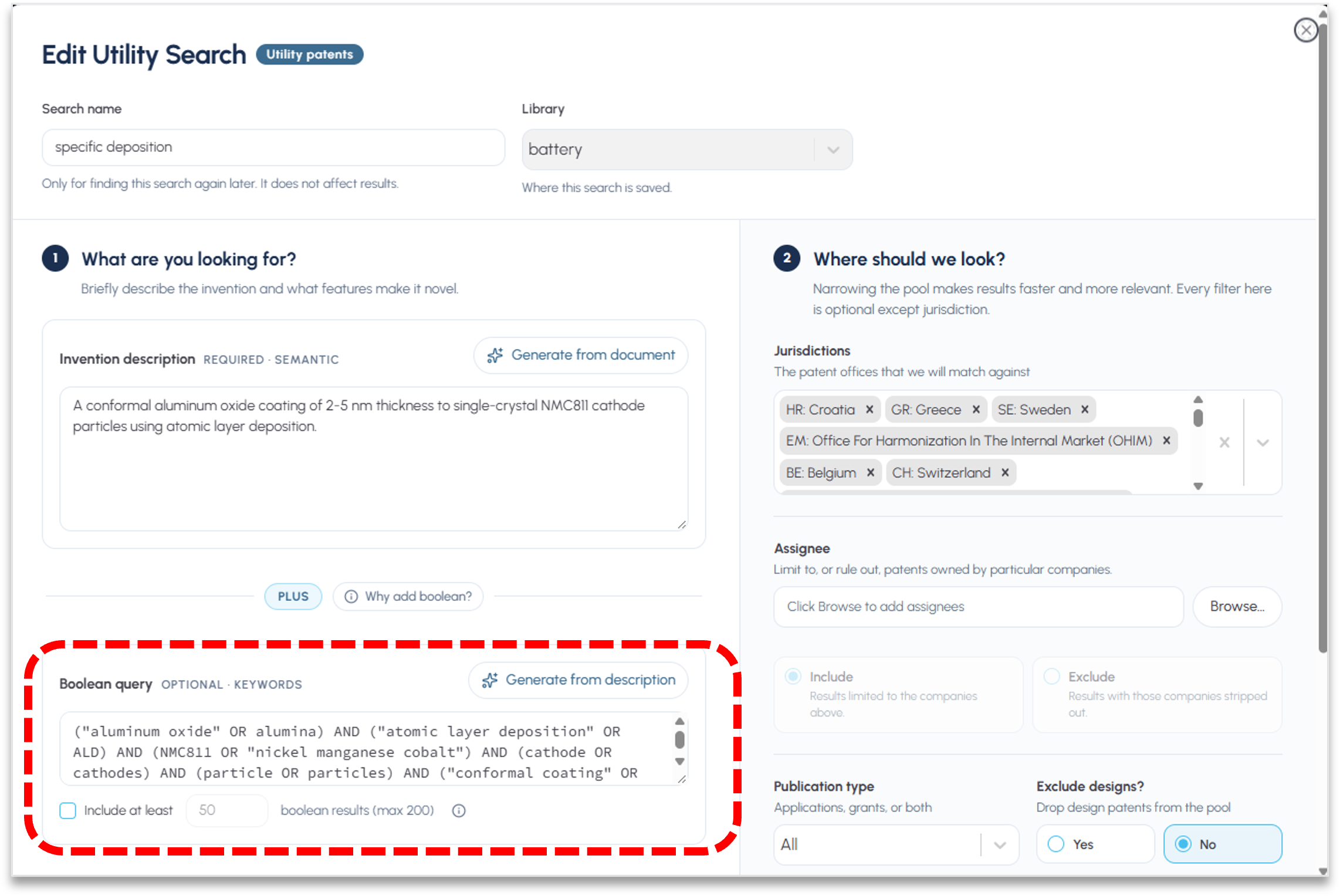
Adding Boolean search to your strategy in FluidityIQ
To get the best of a combined search, start with a sematic strategy that provides context to your search. In the Boolean query panel on the bottom left, click the Generate from description button (see red box above). The platform will automatically generate a draft Boolean syntax that you may use to bring top Boolean results into the semantic search.
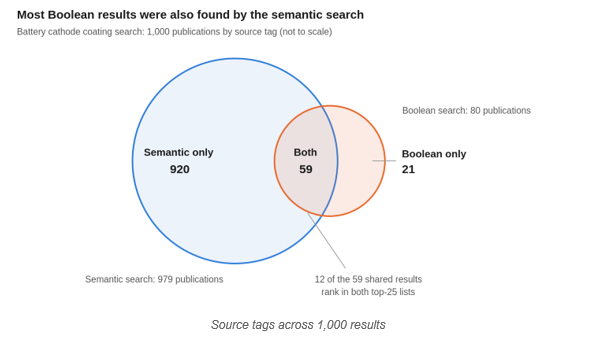
Semantic and Boolean, Together: Why Combined Search Builds a More Complete Picture
For years, patent searchers have debated which approach is better. Semantic search understands meaning, so it finds relevant documents even when they use different words. Boolean search follows your exact instructions, so it is precise, repeatable, and easy to explain. Each has real strengths, and each has blind spots.
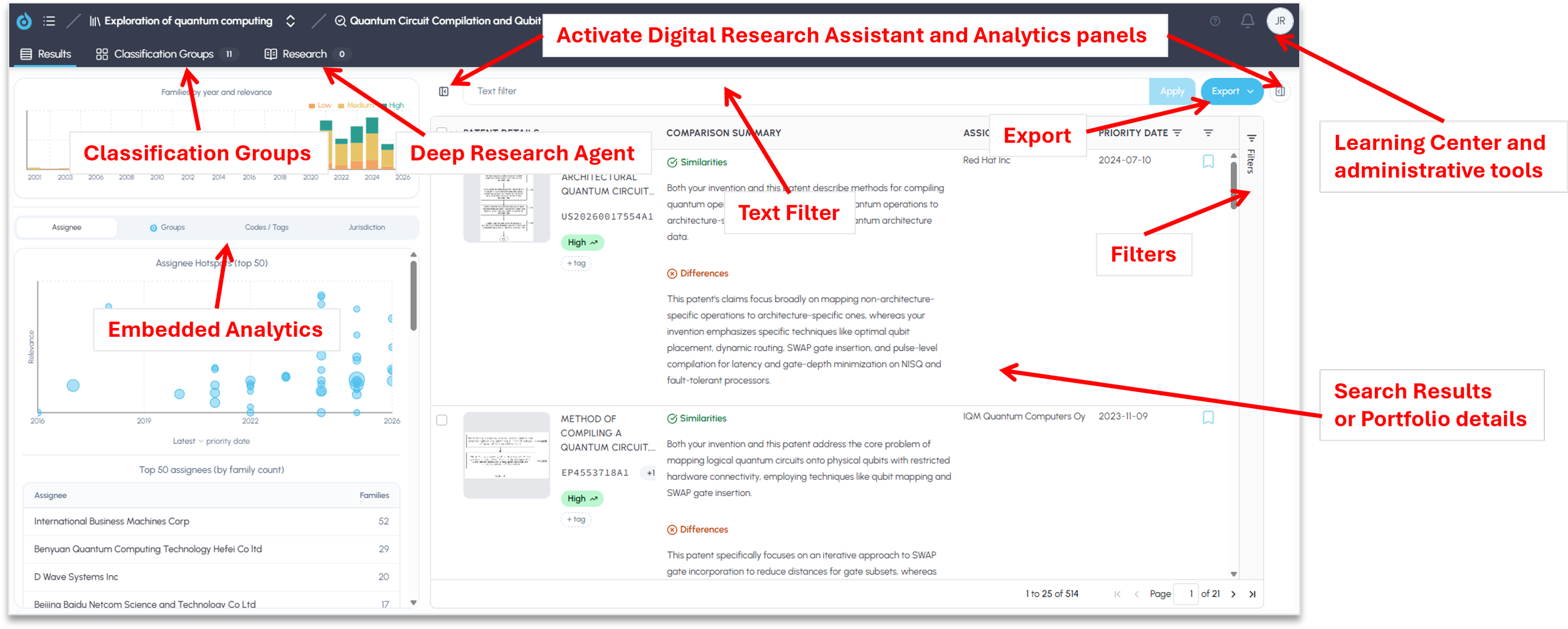
Navigating Features of the FluidityIQ Results Page
FluidityIQ is a feature-rich, all-in-one platform. Rather than offering multiple modules that customers must subscribe to separately, the platform includes portfolio management, utility patent search, and industrial design search in a single subscription. The price is the same whether you use the embedded AI capabilities or need complete global coverage for a search. Our unique pay-as-you-go model helps customers align cost with value in a way no other platform supports.
Semantic Search Query Methodology FAQ
FluidityIQ ranks documents by meaning, not by matching strings, so the words you leave out of a query shape the results as much as the words you put in. The single biggest lever on result quality is how you translate a claim or an invention into a query: what you keep, what you strip, and how you split it. The answers below give explicit query-construction rules, then show how those rules shift across freedom-to-operate, novelty, and invalidity work.
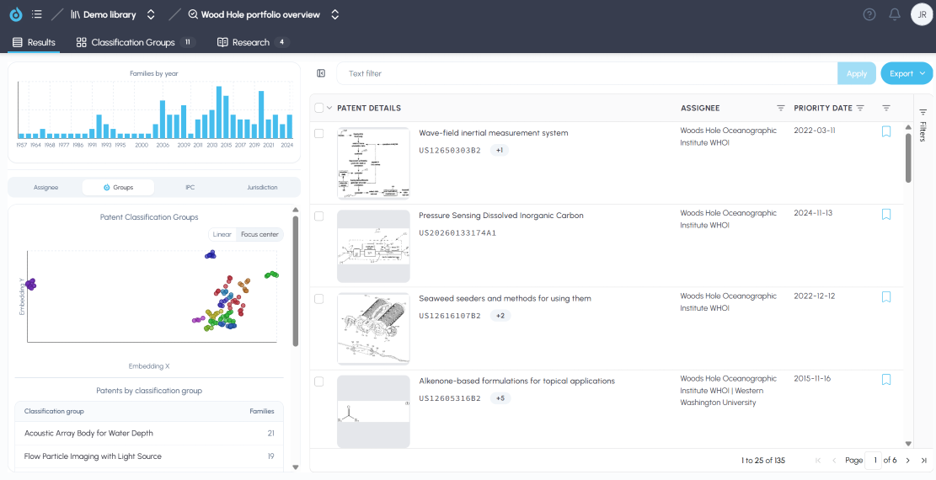
FluidityIQ platform Quick Reference guide
This Quick Start Guide provides high-level guidance to help users get the most out of the platform. This guide may link you to deeper support articles in order to avoid repetition. More helpful information can be found by visiting the Learning Center by clicking on the “question mark” icon in the upper right of the screen once logged in.
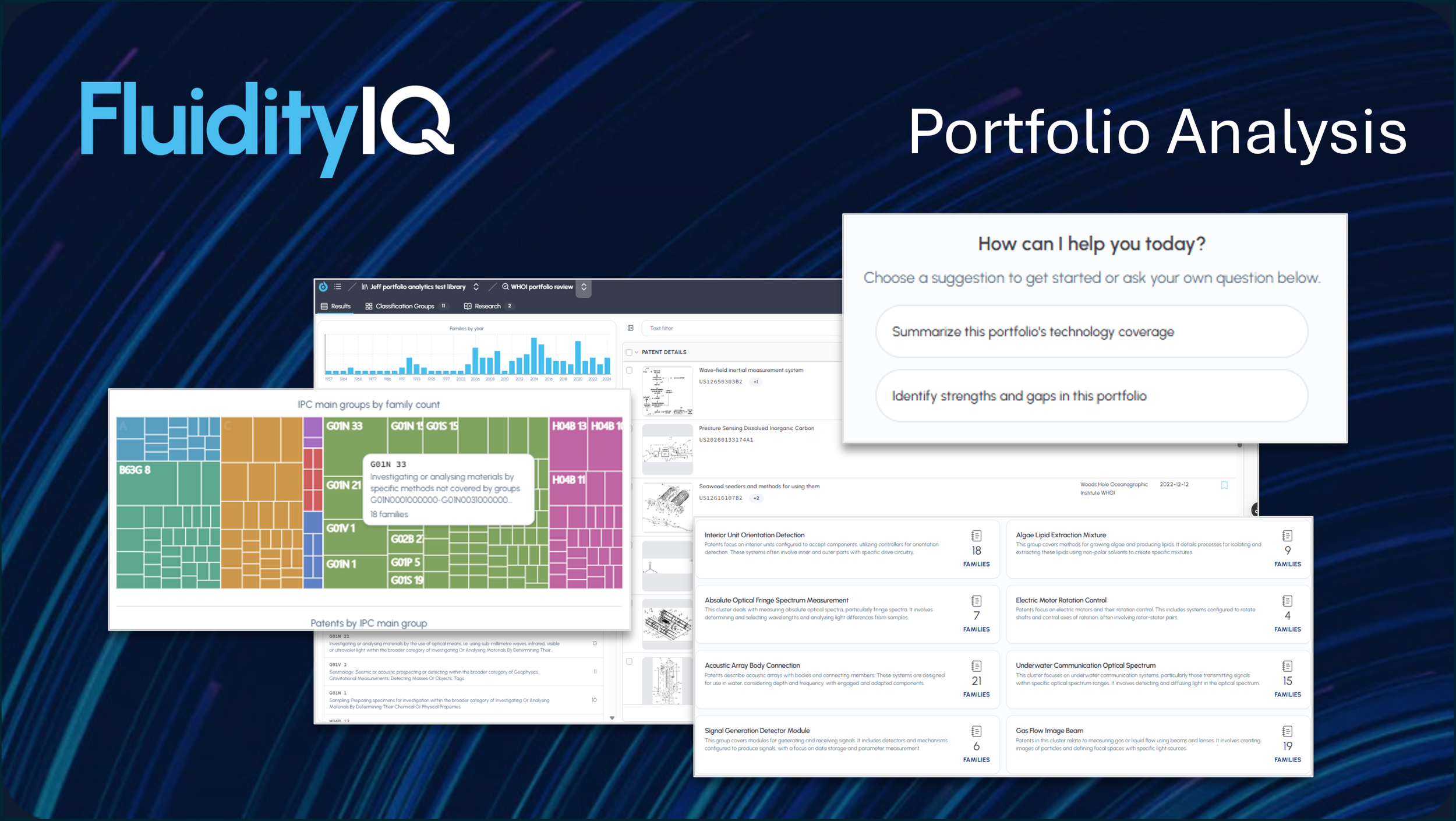
Getting started with the FluidityIQ portfolio analysis features
Portfolio analysis is a third way to build a corpus in FluidityIQ. Where a utility search starts from an invention description and a design search starts from an image, a portfolio lets you define the corpus directly — by keying in a list of patent numbers, uploading a spreadsheet, or searching and selecting by assignee. What you create is a first-class FluidityIQ workspace, so the same analytics and Deep Research Agent you already use are ready to run against it the moment it's built.
Using the FluidityIQ administration features
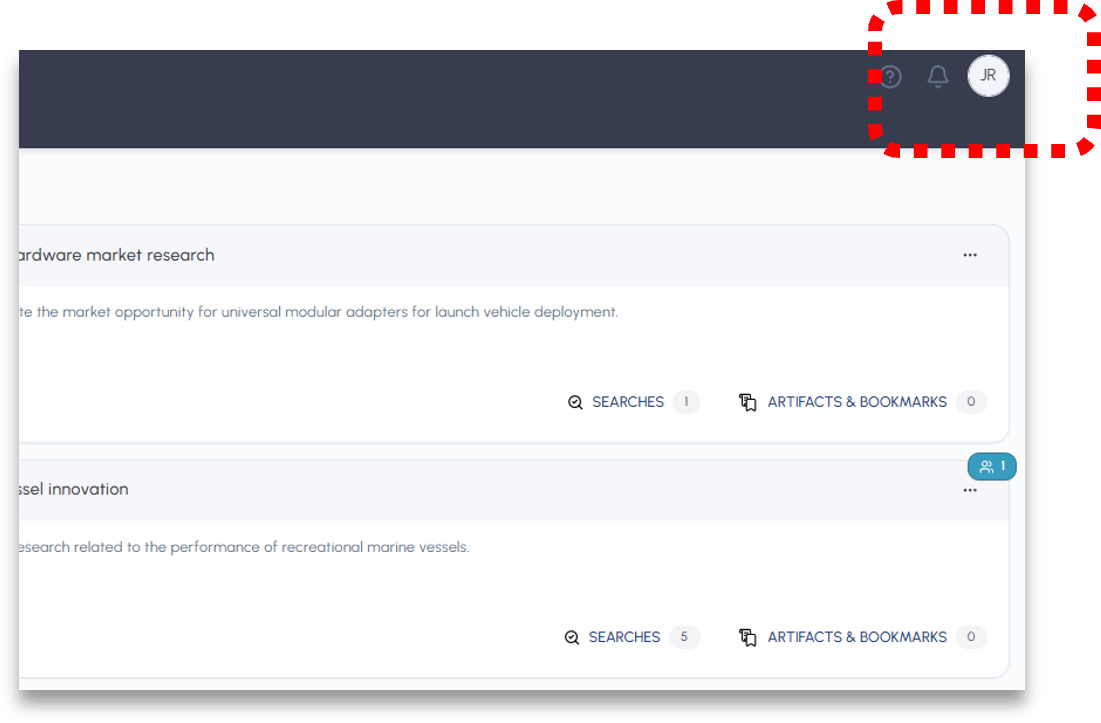
All users have access to the administrative module and can open the module by clicking on the icon in the upper right-hand corner of the application after logging in (see below). The admin module will enable all users to see their usage and manage their settings.
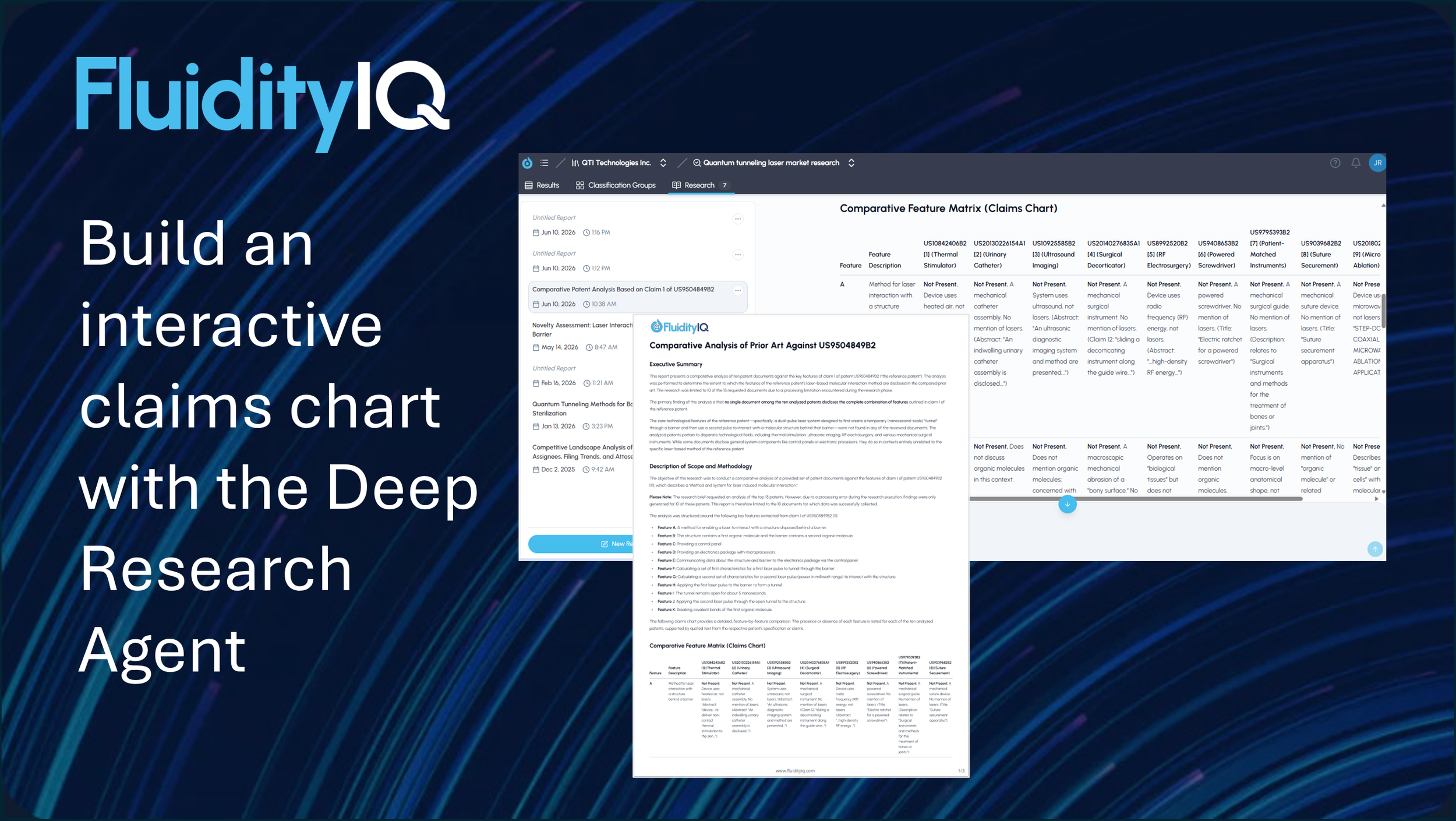
Building a claims chart with FluidityIQ
Claims charting has traditionally been a time-intensive manual process, requiring practitioners to work through claim language line by line against a set of references. FluidityIQ compresses that workflow significantly. By combining a semantically ranked corpus with a research agent that understands natural language instructions, you can move from a search strategy to a structured, sourced claims analysis in a single session. Whether you are conducting a freedom-to-operate review, building an infringement narrative, or mapping a competitive landscape, the output is the same: a clear, organized record of where claim elements find support in the prior art and where they do not. The ability to anchor the analysis to either user-defined features or the specific language of an existing claim gives practitioners the flexibility to tailor the chart to the task at hand, without rebuilding the workflow from scratch each time.
Getting started with design patent search
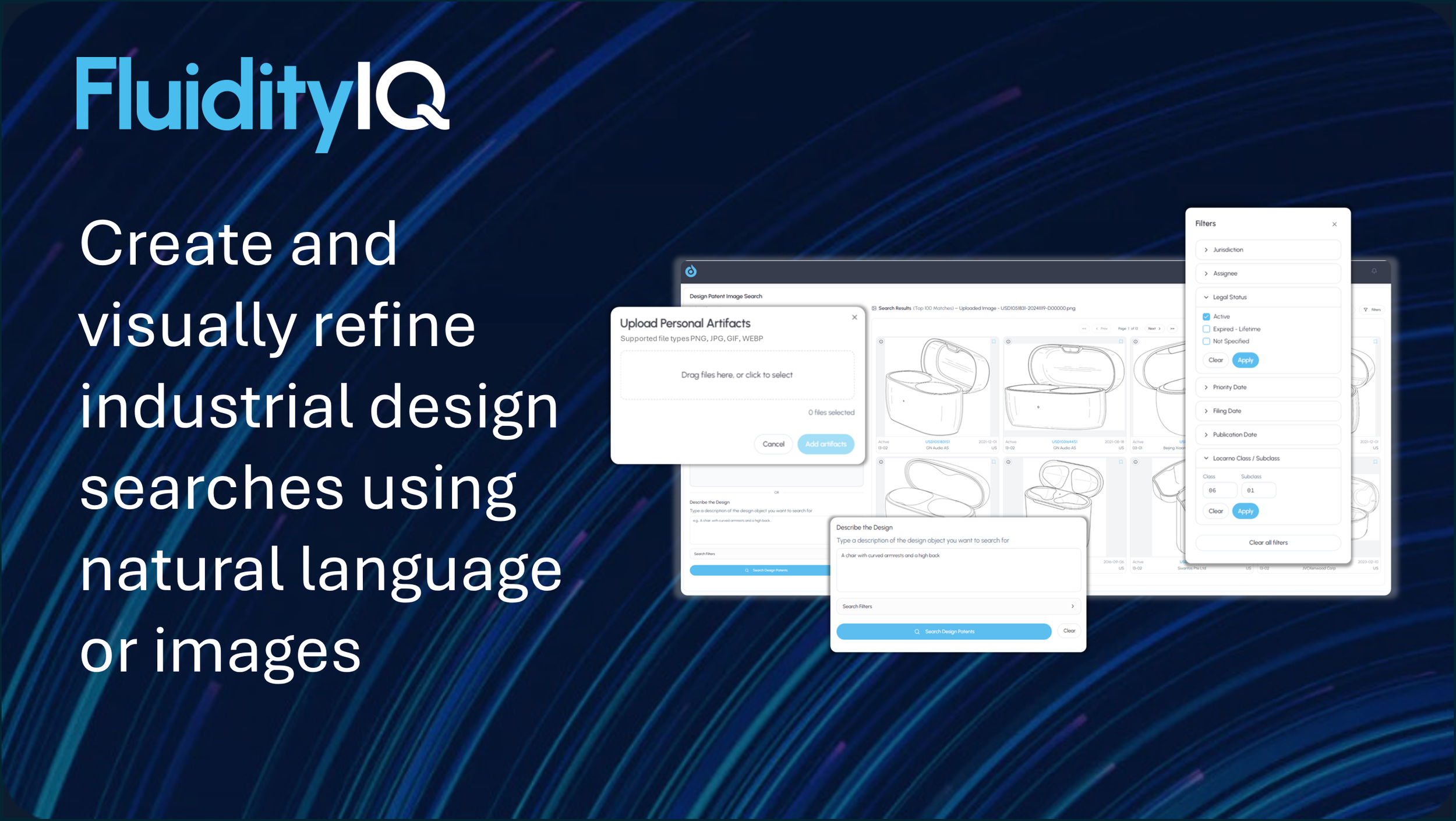
Design patent clearance, freedom-to-operate analysis, and competitive design monitoring all begin with the same challenge: finding visually similar designs across a global corpus of filings. Traditional keyword and classification searches were built for utility patents — they struggle with the fundamentally visual nature of industrial design. FluidityIQ's Design Patent Search is purpose-built for this problem, combining a corpus of more than 33 million vectorized design images with natural language and image-based search to surface relevant results faster and with greater precision than any classification-driven approach.
Getting started with the Deep Research Agent
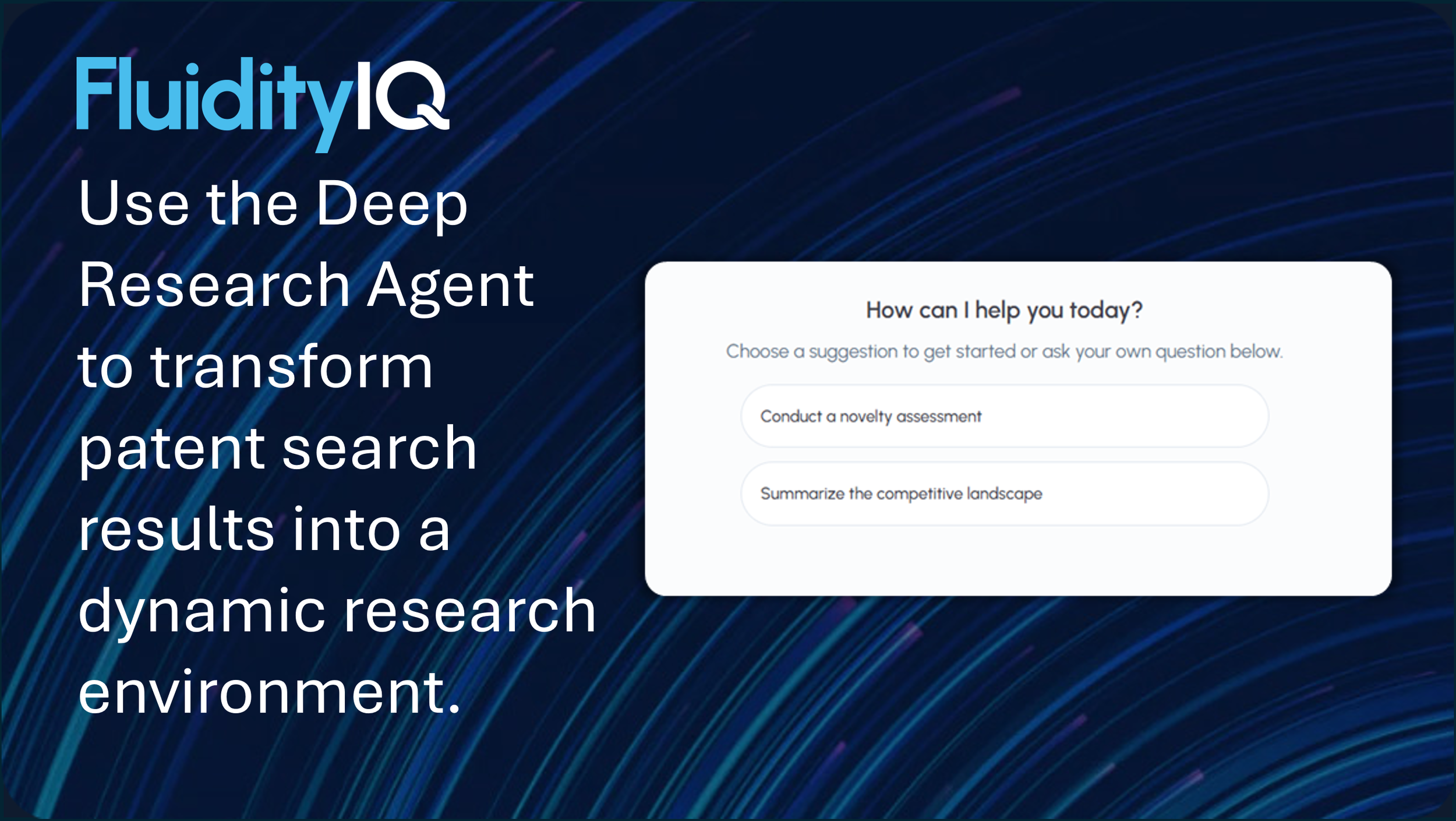
FluidityIQ's Deep Research Agent transforms a set of patent search results into a working research environment — one where you can interrogate a curated corpus of patents, draw on the full breadth of academic literature, and generate structured, citable reports through natural conversation. Whether you are conducting a novelty assessment, mapping a competitive landscape, or exploring the academic foundations of an emerging technology, the agent gives you a research partner that works at the speed of your questions.
Patent monitoring, landscape analysis and competitive intelligence using FluidityIQ
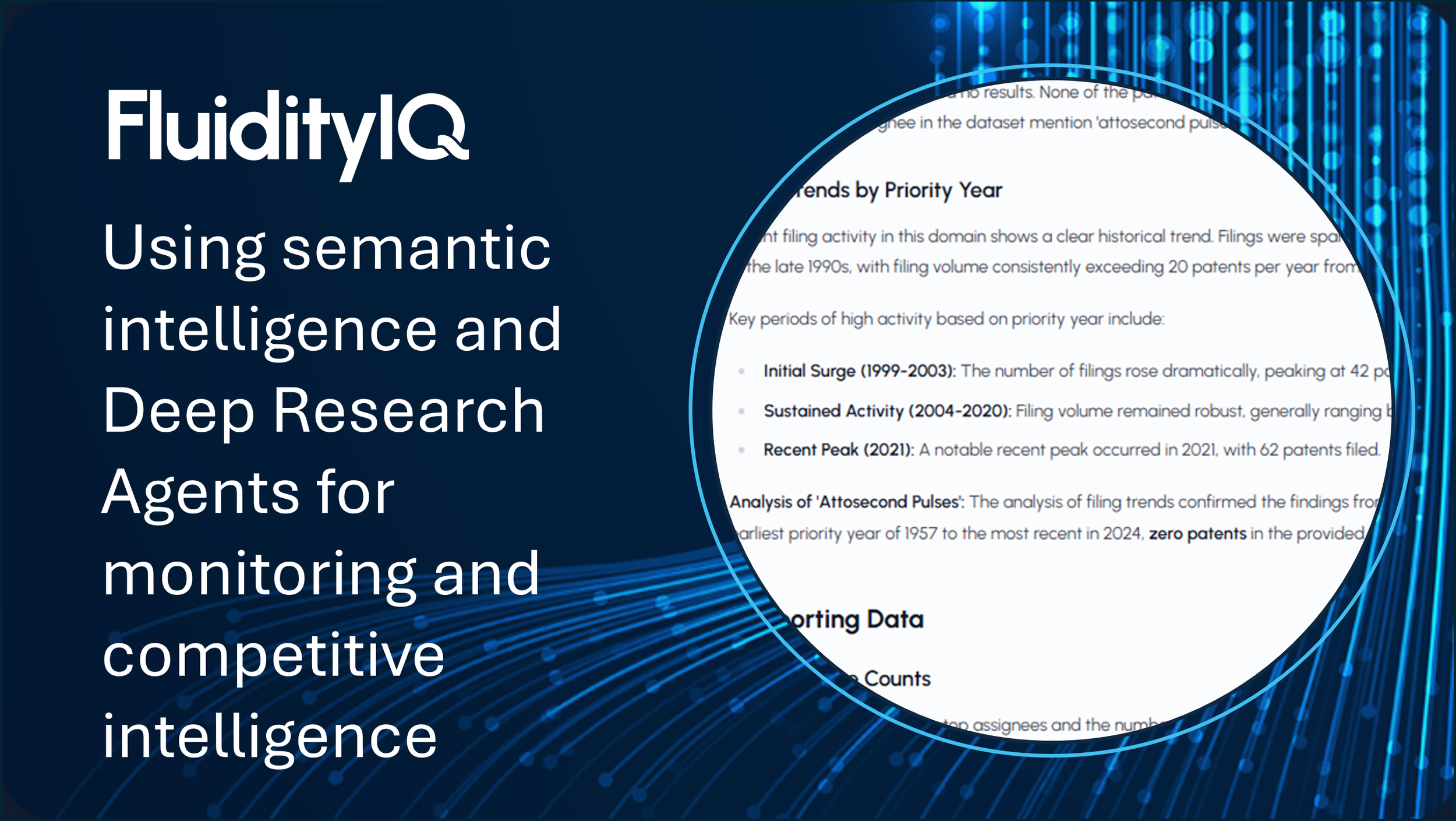
Patent landscape reports help companies and attorneys turn complex patent data into actionable business intelligence, supporting smarter innovation, reduced legal risk, and stronger competitive positioning. By analyzing who is patenting what, where, and how quickly, these reports reveal technology trends, competitive threats, freedom-to-operate risks, and untapped white space—insights that inform R&D strategy, portfolio development, market entry, licensing, M&A due diligence, and litigation planning. With FluidityIQ’s tools, teams can quickly surface these insights, visualize crowded and open technology areas, and make confident, data-driven decisions that align intellectual property strategy with real-world business goals.