

FluidityIQ Patent MCP
Connect FluidityIQ's patent intelligence to the AI tools you already use — or build your own custom workflows. No infrastructure required to get started.

FluidityIQ MCP
Model Context Protocol (MCP) is an open standard that lets AI assistants like Claude or ChatGPT connect directly to external data sources and tools. Instead of copying and pasting patent data into a chat window, MCP creates a live connection — so your AI assistant can search and reason using FluidityIQ's semantic patent intelligence in real time, right inside your workflow. The result is patent research that thinks beyond keywords.
Prompt Engineering Support
Getting the most from AI-assisted patent research depends on how you ask. Our prompt engineering support helps law firms and IP teams build search queries that consistently surface the right results — so your workflow delivers precision, not just volume. Service packages include workflow design, tested query templates, and hands-on onboarding.
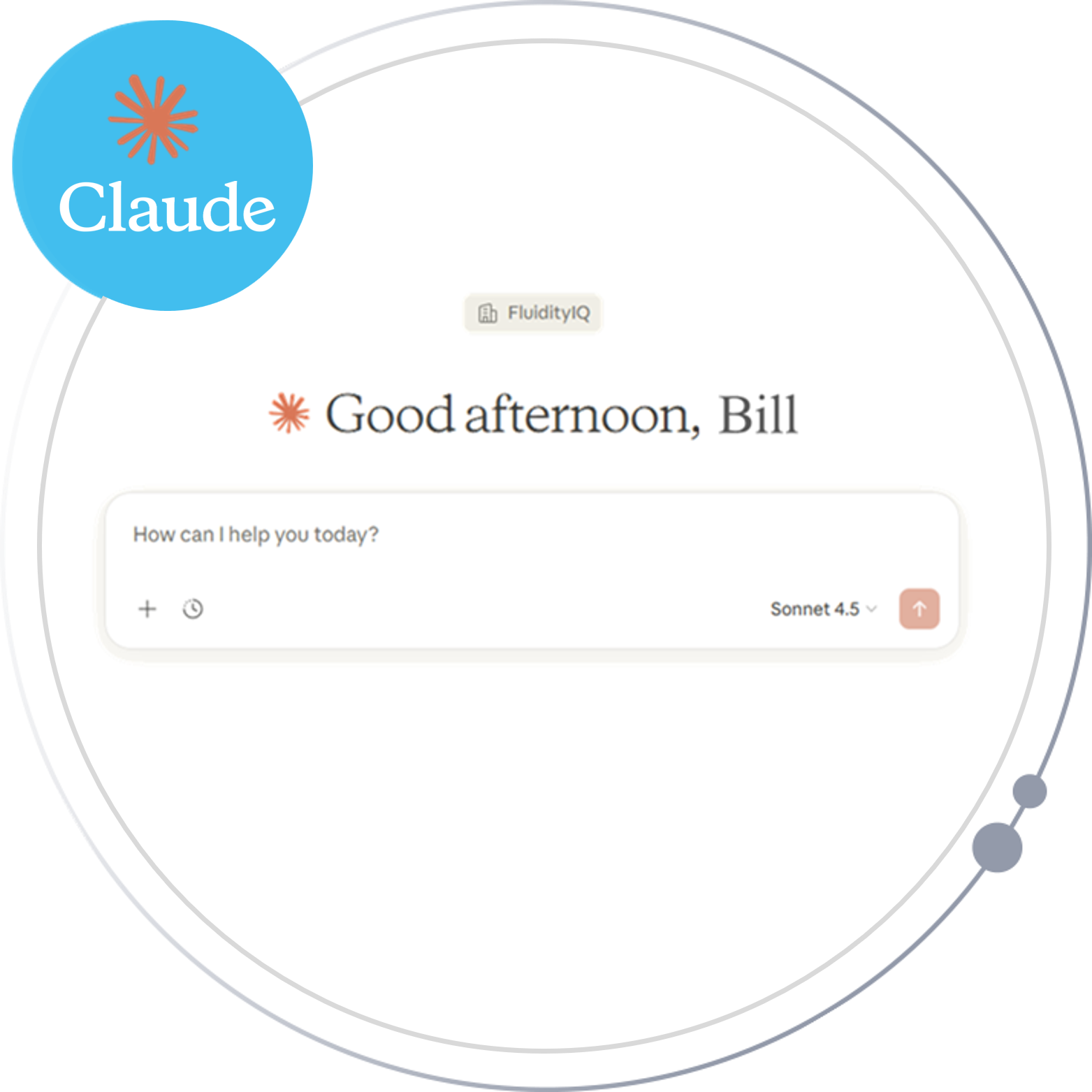

Getting Started with Claude - No Coding Required
With a Claude Pro or Team account and the FluidityIQ MCP connection, you can search and analyze patents conversationally to get the most out of your own expertise and experience — just ask questions in plain language and get results instantly. Claude is available as a web-based AI assistant or as Claude Cowork, a desktop tool designed for non-developers. FluidityIQ offers a native Cowork plug-in for seamless one-click integration. Either way, connecting FluidityIQ takes minutes and requires no coding. Ideal for IP professionals who want the power of AI-assisted patent research without a technical setup.
Note: Paid account with Anthropic is required. See Anthropic website for details.
FluidityIQ semantic search power embedded in your workflow
FluidityIQ's semantic engine goes beyond keyword matching to find patents by meaning, context, and concept. Our coverage spans more than 170 million patents across global databases, and our semantic search combines rich models with intelligent reranking to surface the results that actually matter to your query — not just the ones that share your terminology. Whether you're running prior art searches, competitive analysis, or emerging technology research, you get precision at scale.